Customer Lifecycle Marketing and ABM Explained (2026)
Customer Lifecycle Marketing and Account-based Marketing are not competing strategies. Learn how CLM and ABM work together to drive retention, expansion, and long-term B2B growth.
ABM
Get ABM Insights straight in your inbox
ABM interviews, thought leadership, news and much more
Customer Lifecycle Marketing (CLM) and Account-based Marketing (ABM) are not competing strategies. ABM drives focused acquisition and expansion of high-value accounts, while CLM ensures customers adopt, grow, renew, and advocate over time. Companies that connect ABM and CLM outperform those that treat customer growth as a post-sales afterthought.
In practical terms, this means:
ABM wins and expands priority accounts; CLM maximizes their lifetime value
Retention, adoption, and expansion are growth levers — not operational tasks
The customer journey does not end at conversion and should not “handoff” between teams
ABM and CLM work best as a continuous loop, not separate motions
Marketing plays a role before and after the deal is closed
At strategicabm, many of our enterprise B2B clients ensure that the customer is at the center of their ABM strategies.
In the world of B2B marketing, two strategies have gained significant ground and investment in recent years: Account-based Marketing (ABM) and Customer Lifecycle Marketing (CLM).
While the focus of ABM is your most high-value accounts with highly personalized messaging and experiences, CLM aims to nurture and retain your customers to gain them for life.
Though these two strategies may seem distinct, they share common goals and can (and should) work in partnership to drive your organization’s growth.
In this article, I explore Account-based Marketing and Customer Lifecycle Marketing and share why we believe investing in CLM is as crucial as ABM for business success.
What is Customer Lifecycle Marketing?
At its core, Customer Lifecycle Marketing (CLM) is a strategy that seeks to build long-term customer relationships and maximize revenue potential at every stage of the customer journey.
CLM involves engaging with your customers beyond the point of purchase, nurturing them through personalized experiences, and encouraging loyalty and advocacy.
The goal is to gain customers for life (and increase their Lifetime Value).
What is Account-based Marketing?
Account-based Marketing (ABM), on the other hand, is a highly-targeted strategy to win, grow, and retain your most important accounts.
It requires Marketing and Sales (and more teams...think Customer Success, etc.) to work seamlessly together to deliver a personalized account experience that engages, educates, and influences key buying committees and decision-makers to select your brand over your competition.
While revenue growth is the ultimate goal in many ABM programs, a successful ABM strategy will ensure you build those important relationships and solidify the reputation of your brand to guarantee a long and profitable partnership with each of your most important accounts.
For many businesses, customers represent a compelling source of efficient growth. This growth results from strategically creating value for customers, as well as for employees, suppliers, and partners. In doing so, they'll earn customer's loyalty and advocacy, generating better margins for the business. (Jared Brickman, Vice President, Center of Excellence, Insight Partners)
What is CLM and ABM?
While Account-based Marketing and Customer Lifecycle Marketing may seem like different approaches they share common goals, so can (and should) work in partnership to drive client growth and retention.
At their core, both strategies aim to increase revenue by building long-term customer relationships.
I consider customer lifecycle to be more of a scaled approach and ABM to be morebespoke. (Akriti Gupta, Global Customer Marketing Director, LinkedIn)
They also share some similarities in their approach:
Personalization
Both ABM and CLM involve personalized messaging and content tailored to specific audiences.
Targeting
Both strategies focus on specific audiences (either accounts or customers) to maximize revenue potential.
Data-Driven
Both ABM and CLM rely on data and analytics to understand and engage their audiences effectively.
North Star
Both CLM and ABM have a clear North Star - the customer - be they present or future. Placing the customer at the center of everything you do ensures you speak with the voice of the customer so can help them to address the challenges they face.
What are the differences between Account-based Marketing and Customer Lifecycle Marketing?
Audience
Your Account-based Marketing strategy will be focused on a specific group of accounts (more than likely a mix of existing customers and key prospects), while CLM is a methodology that can be applied to your entire customer base (or a prioritized subset of it).
The selection of which customers enter a Customer Lifecycle Marketing program will depend on many factors that each business needs to decide. Examples of which include lifecycle stage, e.g. renewal date, adoption status (and risk alerts), recent wins, and potential advocacy opportunities tracked. Equally important will be which customers are viewed as having more cross- and upsell opportunities.
Runway
Customer Lifecycle Marketing scales over time.
It is not something that one turns on overnight. It needs runway to launch and runway to launch across all/some of your customer base. It’s a methodology, a set of tactics, and an agreed way of working and engaging.
Account-based Marketing, on the other hand, is much more customized. Each customer (current or future) will receive a bespoke approach depending on their value to your business and the ABM program they are assigned to.
Messaging
Depending on the use case of your Account-based Marketing strategy your message may well be different from that of your CLM strategy. This may be focused more around brand experience, user use cases, retention, and loyalty.
I would add that CLM is also well served when there is a specific sales renewal team in place. Now always the case but a huge help if it exists. (Gabrielle Pirzad, Director, ABM Strategy & Global Programs, Cloud Software Group)
Why is Customer Lifecycle Marketing overlooked and underinvested?
Despite the benefits of Customer Lifecycle Marketing many companies overlook and underinvest in this strategy. There are several reasons for this:
1. Focus on acquisition
Many companies prioritize customer acquisition over retention, seeing it as the key to driving revenue growth.
2. Lack of resources
Companies often lack the resources and expertise to implement a comprehensive CLM strategy.
In our extension conversations with B2B marketers, strategicabm often sees CLM initiatives delayed not because teams disagree with the value, but because ownership, metrics, and the budget sit between Marketing, Sales, and Customer Success.
3. ROI misconceptions
There is a misconception that CLM is a purely operational function and does not have a direct impact on revenue growth.
4. Not the role of Marketing
Often Marketing is seen as being pre-sale, then Account and Customer Success teams take over. This is probably one of the greatest mistakes companies can make when onboarding a new customer.
5. Company culture
Yes, I know we’re in 2026 but believe it or not - the customer is not the center of every organization. Just like Marketing is not seen as a strategic arm for some (thankfully fewer and fewer) businesses, not every organization invests in Customer Marketing.
Customer Lifecycle Marketing is an overlooked part of the business, especially in technology companies, where, understandably, one leans more on technical CSM, Solution engineers, etc. to support customers. (Akriti Gupta, Global Customer Marketing Director, LinkedIn)
What is the business case for Customer Lifecycle Marketing?
Investing in Customer Lifecycle Marketing can drive significant business growth and increase revenue potential.
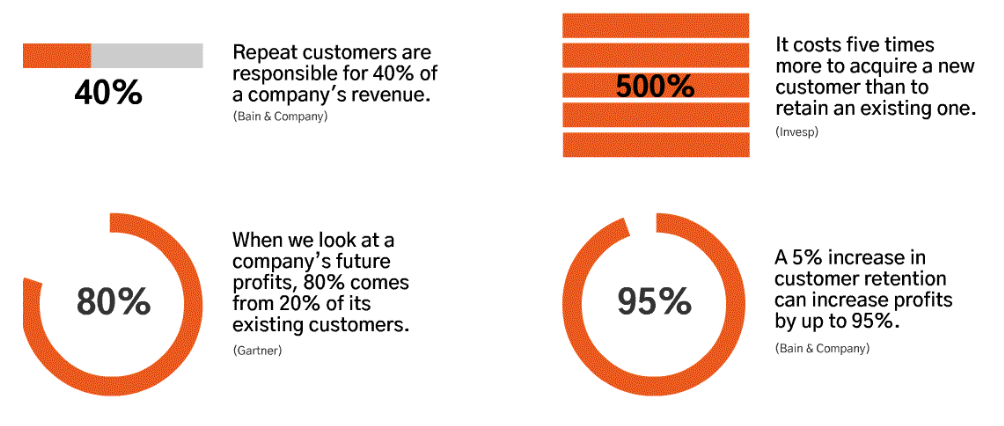
With numbers like these, it is clear that investing in CLM is not only good for customer loyalty and retention but also makes economic sense.
By retaining customers, companies can increase their revenue potential and reduce the costs associated with acquiring new customers.
How do ABM + CLM work together?
Where does one start and the other finish? Or is that the right question?
Let’s take a look at this - an image is a great help here.
Not every company has an Account-based Marketing strategy. And certainly, not every company has a Customer Lifecycle Marketing strategy.
They may have one and not the other. Or they may be mature in one and in infancy mode in the other.
The B2B funnels (MQL, SQL, etc.) we grew up with have been consigned to the same bin as the Betamax tape and the minidisc.
Our customers just don’t buy like that. They don’t move through the funnel like that.
The funnel is much more suited to new customer acquisition - stranger to known - and even then it is flawed.
The reality is that we as vendors or partners should be surrounding our customers - enveloping them in a unique experience - both before they become a customer and after.
There should be no “handoff” between Marketing to Sales and Sales to Customer Success
The experience should be seamless. Equally, as every business and every product/service is different, companies need the flexibility to adapt their ‘customer management’ approach and decide what stages they want - both on the acquisition side as well as on the customer growth and retention side.
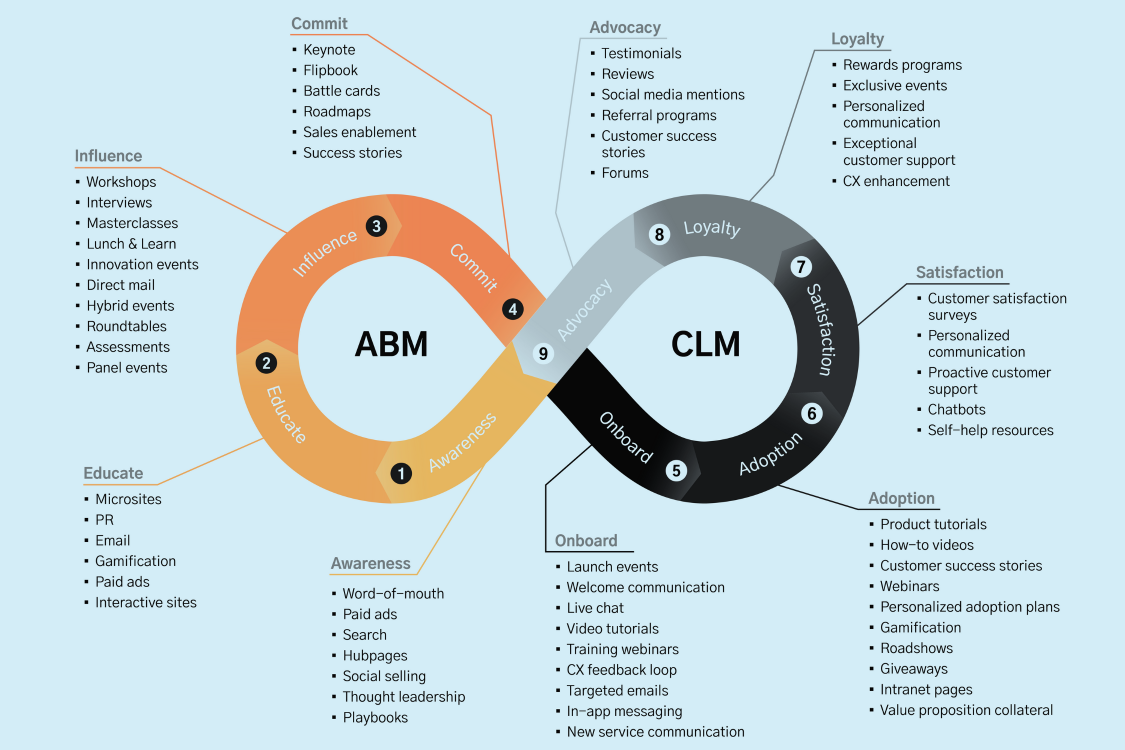
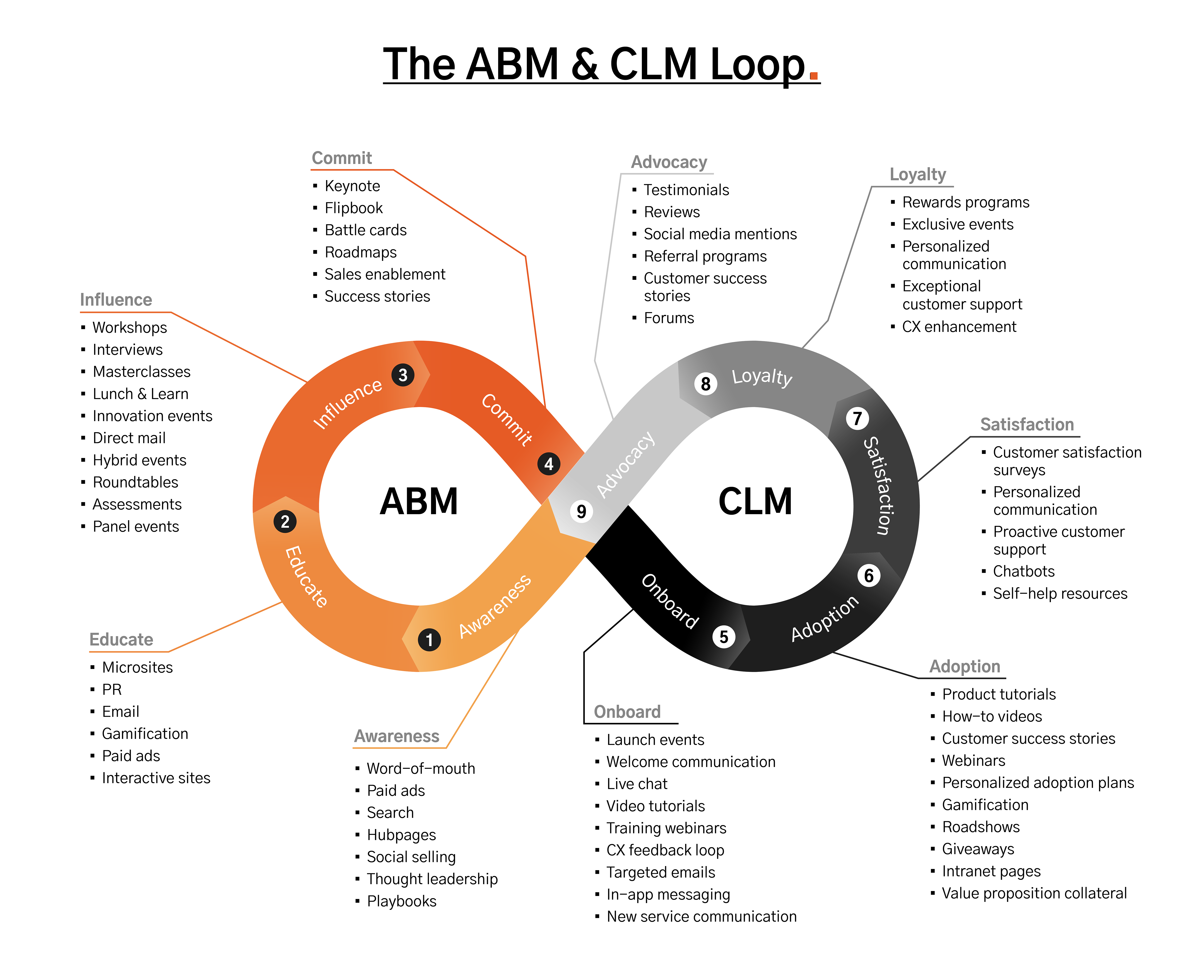
The relationship between Account-based Marketing and Customer Lifecycle Marketing should be viewed more accurately as an infinity loop.
A continuous relationship with the customer where ABM and CLM work in partnership to win, grow, and retain the customer.
Teams that align ABM and CLM typically report faster expansion cycles and stronger renewal conversations, even without increasing acquisition spend.
This can be best expressed in this illustration which highlights the stages and activities from Awareness to Advocacy (and back again).
How do you build a Customer Lifecycle Marketing strategy?
1. Don’t bite off more than you can chew
Gabrielle Pirzad, Head of Global ABM Strategy and Center of Excellence at Cloud Software Group suggests that it is unlikely that organizations can develop their ABM practices and CLM practices concurrently as both take time, effort, and joined-up thinking.
She goes on to say:
I would recommend leading with building ABM to start and then explore with Customer Success and Sales, how this can be connected to Customer Lifecycle Marketing practices to create a seamless flow of activity
2. Link up
Gabrielle also advises joining up with any Sales Renewal team you already have in place to create a Customer Lifecycle Marketing strategy.
3. Call on CLM
Keith Pranghofer, GTM Lead, ISV partnerships at Microsoft believes CLM should be a tactic within an ABM strategy or plan.
Engage CLM as a Center of Excellence for best practices and services. Just like you should with Demand Gen, Brand Marketing, Content Marketing, Customer Marketing, etc.
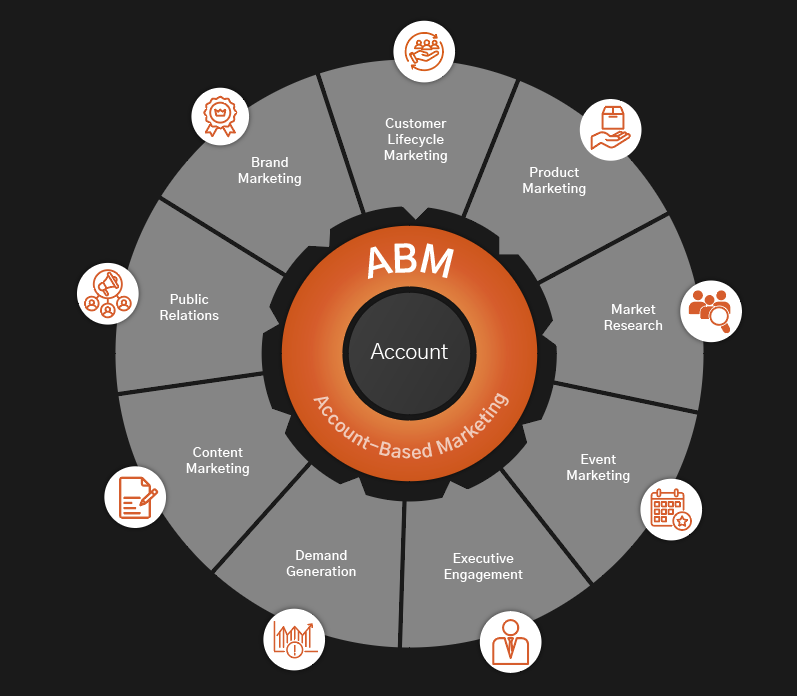
The image below reflects this CLM Center of Excellence concept where ABM can call upon this knowledge, resources, and expertise to deploy on ABM accounts.
4. Re-focus your ABM strategy
There are many use cases for Account-based Marketing - new logo acquisition, repositioning your brand, winning new opportunities, or customer growth and retention.
Many organizations deploy ABM to grow and retain existing customers. Banks and telcos have been experts at this for decades. Winning customers, growing them, and retaining them.
Technology brands with their ‘renewal’ cycles have been less so.
Marlowe Fenne, Director ABX, Pulumi says B2B tech brands need to ensure their ABM program is set up correctly with these customer growth and retention metrics in place.
He goes on to say:
Many organizations with bigger portfolios miss the opportunity to accelerate cross-sell and even get renewals using ABM.
Any company with a strong Account-based Marketing strategy running will be well placed to either extend this to Customer Marketing or lend much of this knowledge and experience to a new CLM function.
Maybe one way of looking at Customer Lifecycle Marketing is as your company-wide “version” of Account-based Marketing.
You’ve already broken down silos (between Sales and Marketing). You’ve already got joint reporting in place. You’ve already placed the customer at the heart of everything you do.
Who’s succeeding at Customer Lifecycle Marketing?
Jared Brickman, Vice President, Center of Excellence, Insight Partners spoke about Customer Marketing in a recent edition of DashDot.
He shared insights and research that have shone a light on the clear lack of investment in this area. All is not lost, however. He goes on to provide a roadmap for customer marketing success that should be welcomed by all B2B Marketers.
What to look out for when deploying a Customer Lifecycle Marketing strategy?
Three common mistakes many organizations make when attempting to launch a Customer Lifecycle Marketing strategy are:
1. Failure to speak the voice of the customer
By that, we mean failing to personalize messaging and content to individual customers. This will not land with impact and this will be seen in the levels of adoption, growth, and retention.
2. Poor customer experience
Another mistake is not providing a seamless customer experience across all touchpoints.
Amber Bogie, Director of Global Marketing, GoTo reinforces this point:
It’s important that everyone - Customer Success, Marketing, Product - does a good job, If there’s one weak link, the customer experience will be poor. It’s hard for Customer Success reps to do it all - Marketing can supplement them.
3. Not using data to inform the CLM experience
Data should be your guide as it is with your Account-based Marketing strategy. In a recent conversation with Gabrielle Pirzad, she explained:
If you are applying CLM to a wide number of your customers, you still need to segment them but possibly using different metrics e.g. Retention Risk, EAR, etc.
She went on to explain: “You may also want to set up Customer Health scorecards where they can be rated by other factors such as level of incumbency (your organization or a competitor), tenure, relationship with decision makers, customer satisfaction, etc.”
How does CLM and ABM work together for customer success?
Customer Lifecycle Marketing is the next piece to Account-based Marketing, and companies that invest in this strategy can drive significant business growth and increase revenue potential.
Investing in CLM makes economic sense and can reduce the costs associated with acquiring new customers.
To succeed in CLM, companies should prioritize personalization, provide a seamless customer experience, and consistently engage with customers throughout their lifecycle - making happy customers for life.
FAQs: Customer Lifecycle Marketing and Account-based Marketing
What is Customer Lifecycle Marketing (CLM)?
Customer Lifecycle Marketing is a strategy focused on building long-term customer relationships by engaging customers beyond the point of purchase. It aims to increase customer lifetime value through adoption, retention, loyalty, and advocacy across every stage of the customer journey.
How is Customer Lifecycle Marketing different from Account-based Marketing?
Account-based Marketing focuses on winning, growing, and retaining a defined set of high-value accounts through highly personalised engagement. Customer Lifecycle Marketing applies at scale across the customer base, nurturing customers over time based on lifecycle stage, adoption, renewal risk, and growth potential.
Why should CLM and ABM work together?
CLM and ABM share the same North Star: the customer. When combined, ABM delivers bespoke experiences for priority accounts while CLM ensures consistent, scalable engagement across the wider customer base. Together, they create a continuous customer experience that supports acquisition, growth, and retention.
Why is Customer Lifecycle Marketing often overlooked?
Customer Lifecycle Marketing is frequently underinvested because many organisations prioritise acquisition over retention, lack dedicated resources, or view CLM as operational rather than revenue-driving. In some companies, Marketing is also incorrectly seen as a pre-sales function, limiting its role post-purchase.
Does Customer Lifecycle Marketing drive revenue growth?
Yes. Retaining and growing existing customers is one of the most efficient ways to drive revenue. The article highlights that repeat customers contribute a significant share of revenue and that even small increases in retention can lead to substantial profit growth.
Where does Customer Lifecycle Marketing sit within the organisation?
Customer Lifecycle Marketing works best when aligned with Sales, Customer Success, and renewal teams. It should be treated as a shared way of working rather than a standalone function, with clear ownership, data alignment, and joint goals.
How does Customer Lifecycle Marketing scale compared to ABM?
CLM is designed to scale across the customer base or a prioritised subset of customers, while ABM remains highly bespoke and targeted. CLM requires a runway to launch and mature, whereas ABM is applied selectively based on account value and strategic importance.
What are common mistakes when launching a CLM strategy?
Common mistakes include failing to personalise messaging, delivering a fragmented customer experience, and not using data to inform engagement. Successful CLM relies on understanding customer health, adoption, and risk signals to guide relevant and timely interactions.
How should companies think about the relationship between ABM and CLM?
The article frames ABM and CLM as an infinity loop rather than linear stages. There should be no hard handoff between Marketing, Sales, and Customer Success. Instead, customers should experience a continuous, joined-up journey from awareness through advocacy.
Is Customer Lifecycle Marketing relevant for all B2B organisations?
While not every company has the same maturity or resources, organisations with an established ABM practice are well positioned to extend into Customer Lifecycle Marketing. Much of the data, insight, and operating model required for ABM can be reused to support CLM initiatives.
How to stay ahead with ABM
Want to stay on top of ABM’s hottest trends? You can subscribe to our monthly e-newsletter, DashDot, where we explore all things Account-based.